Hardness
Not reported
No measured value availableHardness is not estimated from location.
Des Moines Water Works met federal limits in the EPA records we checked. This report covers Des Moines Water Works, which serves about 246,055 people using surface water; missing results are labeled rather than inferred.
Same four checks on every city page, always in the same order. Missing values are labeled, never guessed.
Health-based limit-exceedance records since Oct. 2021; resolved or archived records are not presented as current.
Period ending December 2024.
No detected PFAS rows in the UCMR 5 records for this system.
Hardness is not estimated from location.
Each row identifies the result, its data period and its source. Missing measurements are not estimated.
| Result | Finding / comparison | Date / period | Source |
|---|---|---|---|
| Health-based violations | No health-based limit-exceedance flag in these water-system records. | Since Oct. 2021 | EPA drinking-water data |
| Lead · 90th percentile | 0 ppb · Below the 15 ppb action level | December 2024 | EPA Lead & Copper data |
| PFAS | No detected PFAS rows in these system records. | UCMR 5 survey period | EPA UCMR 5 |
| Lithium | Highest reported UCMR 5 result: 28 µg/L · monitoring result, not presented as a violation | UCMR 5 survey period | EPA UCMR 5 |
| Hardness | Not reported. Hardness is not estimated from location. | Not reported | A utility report or water test is needed for a measured value. |
Des Moines Water Works did not trigger the lead or PFAS screening rules used for the headline. That does not mean every possible contaminant was tested or absent. For city water, treatment decisions can still depend on taste, disinfectant, plumbing, hardness and your own goals. The finder uses this report as a starting point, then asks about household flow and budget.
Flow demand, plumbing, maintenance and budget can change which treatment fits even when two homes share the same utility.
These are rule-based matches from the current FilterTier rankings. Size still depends on your home.
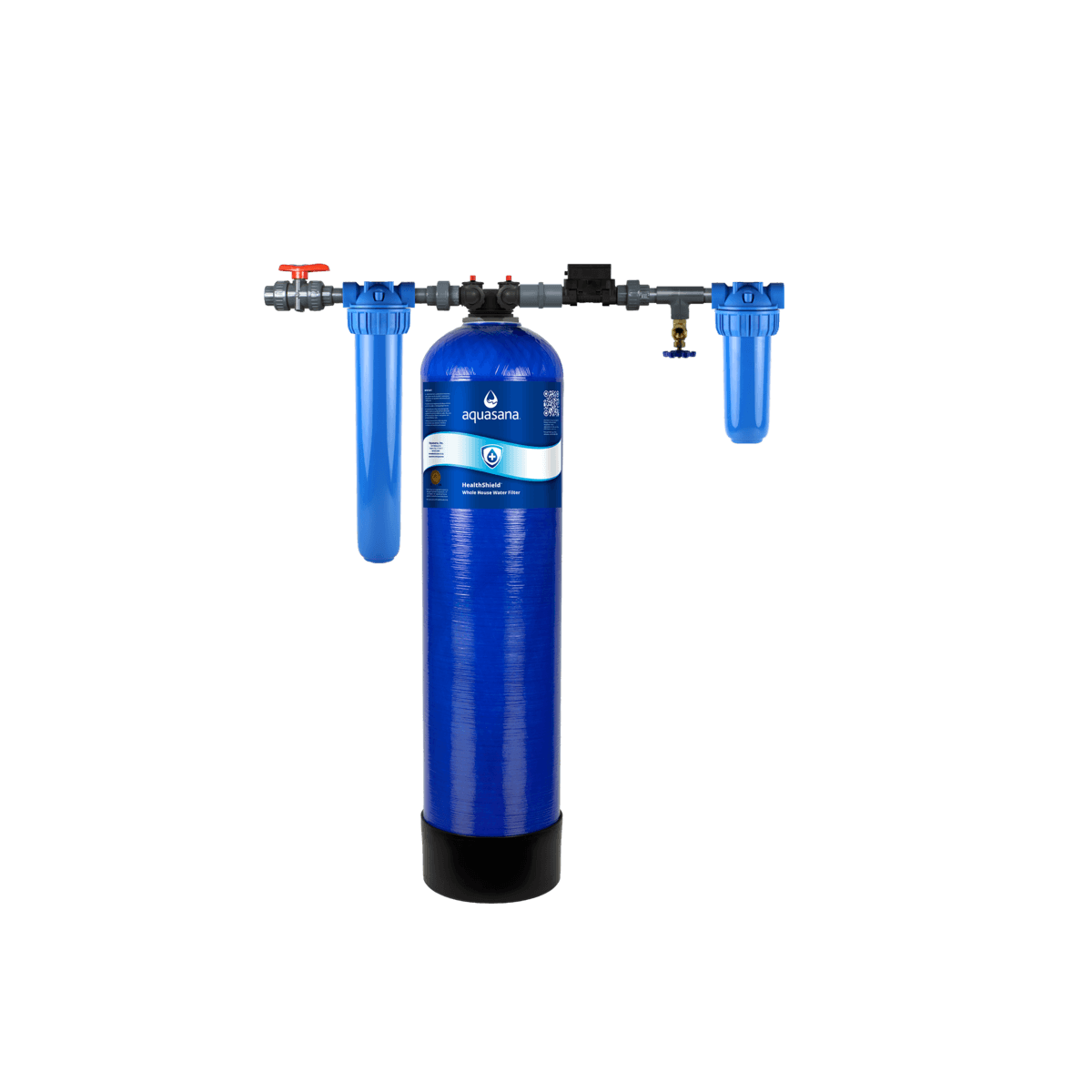
Current #1 on the city-water ranking. Exact-system health-effect reduction evidence is strong, but its 5.7 GPM certified/service flow makes household sizing important.
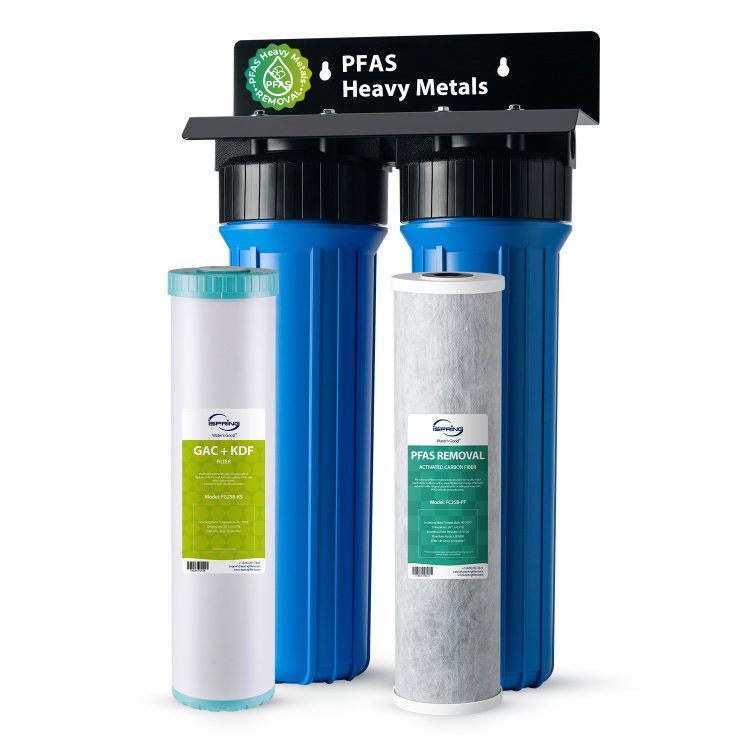
Current #2 on the city-water ranking. It offers much higher published flow, with verified exact-model PFAS/heavy-metal product data; confirm the exact certification evidence that matters to your goal.
Ranking updates can change these matches. Evidence label and flow are shown so the tradeoff stays visible.
The original 2026 drinking-water quality report jointly published for Central Iowa Water Works (CIWW) and Des Moines Water Works (DMWW) reports mostly 2025 sampling results. CIWW produces and supplies treated water regionally; DMWW remains a retail utility and operates the Fleur Drive, L.D. McMullen and Saylorville plants. They serve different zones. A plant sample or regional alert cannot be treated as the water measurement at every Des Moines address. This page's federal public-water-system identity is IA7727031; check the supplier on your bill.
The report's Des Moines tap-lead row tested in 2024 lists the 90th percentile as ND (not detected), a sample range of ND–21 µg/L (ppb), and notes one sampled tap above 15 µg/L, the report's then-applicable action-level comparator. One household exceedance can coexist with a non-detected system 90th percentile; the individual maximum is not the system 90th percentile and neither determines lead in your plumbing. The underlying federal snapshot encoding of zero is not a verified zero at every tap.
For 2025, the report lists treated-water nitrate (as nitrogen) levels found of 9.17 mg/L at Fleur Drive, 9.04 mg/L at L.D. McMullen and 4.82 mg/L at Saylorville against the report's 10 mg/L MCL. These are separately reported treatment-plant observations, not one citywide customer-tap average or a claim of a violation. Raw Raccoon/Des Moines River spikes during 2026's supply restrictions must not be compared to drinking-water limits as though they were distributed water.
The original 2025 treatment-plant table reports PFBA at Fleur Drive 2.6 ng/L (ppt), with the other two plants recorded ND for that row. The table labels PFBA unregulated, so this is an observed plant-specific test, not a legal PFAS MCL violation, a household reading or a claim that other PFAS compounds were all not detected. CIWW's June 2026 nitrate-related lawn-watering restriction was a treatment-capacity conservation measure; CIWW's July 27, 2026 notice ended mandatory and voluntary restrictions and returned its regional plan to Stage 0 after 193 days of nitrate-removal operation. Consult CIWW for any later new advisories rather than assuming July's decision proves conditions today.
Original 2026 report page 6 visually checked November 9, 2026: lead from 2024; nitrate and PFBA from 2025 separately sampled treatment plants. The July 2026 supply restriction was not a drinking-water MCL exceedance. Actual current enforcement closure, address-specific treatment plant and utility, laboratory reporting limits and any later restrictions need fresh confirmation. Federal original SDWA/UCMR5 records and Google indexing were not altered.
A utility service area is not the same as a city boundary. Service-area maps can be approximate; confirm your provider on your bill.
A shared system ID connects the reports, but does not mean every tap has identical water quality.
See the utility’s service-area map for coverage beyond this city.
Reported wholesale relationships may be seasonal, backup or partial supplies. They do not establish today’s water blend, treatment or an identical contaminant profile.
No supplier relationship was provided.
Housing estimates describe Des Moines, not the materials, water quality or plumbing demand of your individual home.
Housing age does not confirm lead plumbing.
Tenure is context, not a treatment requirement.
Room count does not determine peak flow.
Explore the latest available outdoor air readings from AirNow. Credit: U.S. EPA AirNow and participating state, local and tribal air agencies. Live observations are preliminary and may change after quality assurance; they are not regulatory compliance determinations. Observation times are shown in the map. Missing readings do not mean clean air.
Open the live AirNow map ↗For validated regulatory air-quality data and trend analysis, use EPA AirData/AQS.
The water system covered in this report is Des Moines Water Works (system ID IA7727031), serving about 246,055 people. If your bill shows another utility, use the ZIP report to confirm your system.
The latest 90th-percentile result in this dataset is 0 ppb for the period ending December 2024. Lead can also come from building plumbing, so utility results do not describe every tap.
PFAS was included in the national survey data used here and no sampling-point average in the city index triggered the screening flag.
Not automatically. The right treatment depends on the exact contaminants, your plumbing, household flow, maintenance preference and budget. Use the finder to combine this public-water profile with your home details.
Service boundaries can cross city limits, and a city may have more than one provider. Match the utility and system ID to your water bill before applying a public-water result to your address. Private wells need their own testing.
Utility identity, system ID, source-water context, violations and Lead & Copper results. For lead, the 15 ppb action level remains the applicable transition-period threshold until LCRI compliance begins November 1, 2027; FilterTier uses 10 ppb as a screening flag on these city pages.
National PFAS survey data used for the city screening rule. Survey data does not by itself establish MCL compliance. As of October 2026, PFOA/PFOS MCLs remain in force; EPA has separately proposed an optional compliance extension and proposed rescinding the PFHxS, PFNA, HFPO-DA and hazard-index provisions.
Match the provider and system ID to your water bill. Data snapshot: EPA SDWA 2026Q2 / UCMR 5 August 2026 final.
Des Moines Water Works publishes annual water-quality reports; reviewed Iowa/EPA PWSID IA7727031 is retained.
Find the public water systems mapped to your ZIP and choose the one on your bill.