Hardness
Not reported
No measured value availableHardness is not estimated from location.
Buffalo Water Authority met federal limits in the EPA records we checked. This report covers Buffalo Water Authority, which serves about 276,000 people using surface water; missing results are labeled rather than inferred.
Same four checks on every city page, always in the same order. Missing values are labeled, never guessed.
Health-based limit-exceedance records since Oct. 2021; resolved or archived records are not presented as current.
Period ending December 2025.
No detected PFAS rows in the UCMR 5 records for this system.
Hardness is not estimated from location.
Each row identifies the result, its data period and its source. Missing measurements are not estimated.
| Result | Finding / comparison | Date / period | Source |
|---|---|---|---|
| Health-based violations | No health-based limit-exceedance flag in these water-system records. | Since Oct. 2021 | EPA drinking-water data |
| Lead · 90th percentile | 4 ppb · Below the 15 ppb action level | December 2025 | EPA Lead & Copper data |
| PFAS | No detected PFAS rows in these system records. | UCMR 5 survey period | EPA UCMR 5 |
| Hardness | Not reported. Hardness is not estimated from location. | Not reported | A utility report or water test is needed for a measured value. |
Buffalo Water Authority did not trigger the lead or PFAS screening rules used for the headline. That does not mean every possible contaminant was tested or absent. For city water, treatment decisions can still depend on taste, disinfectant, plumbing, hardness and your own goals. The finder uses this report as a starting point, then asks about household flow and budget.
Flow demand, plumbing, maintenance and budget can change which treatment fits even when two homes share the same utility.
These are rule-based matches from the current FilterTier rankings. Size still depends on your home.
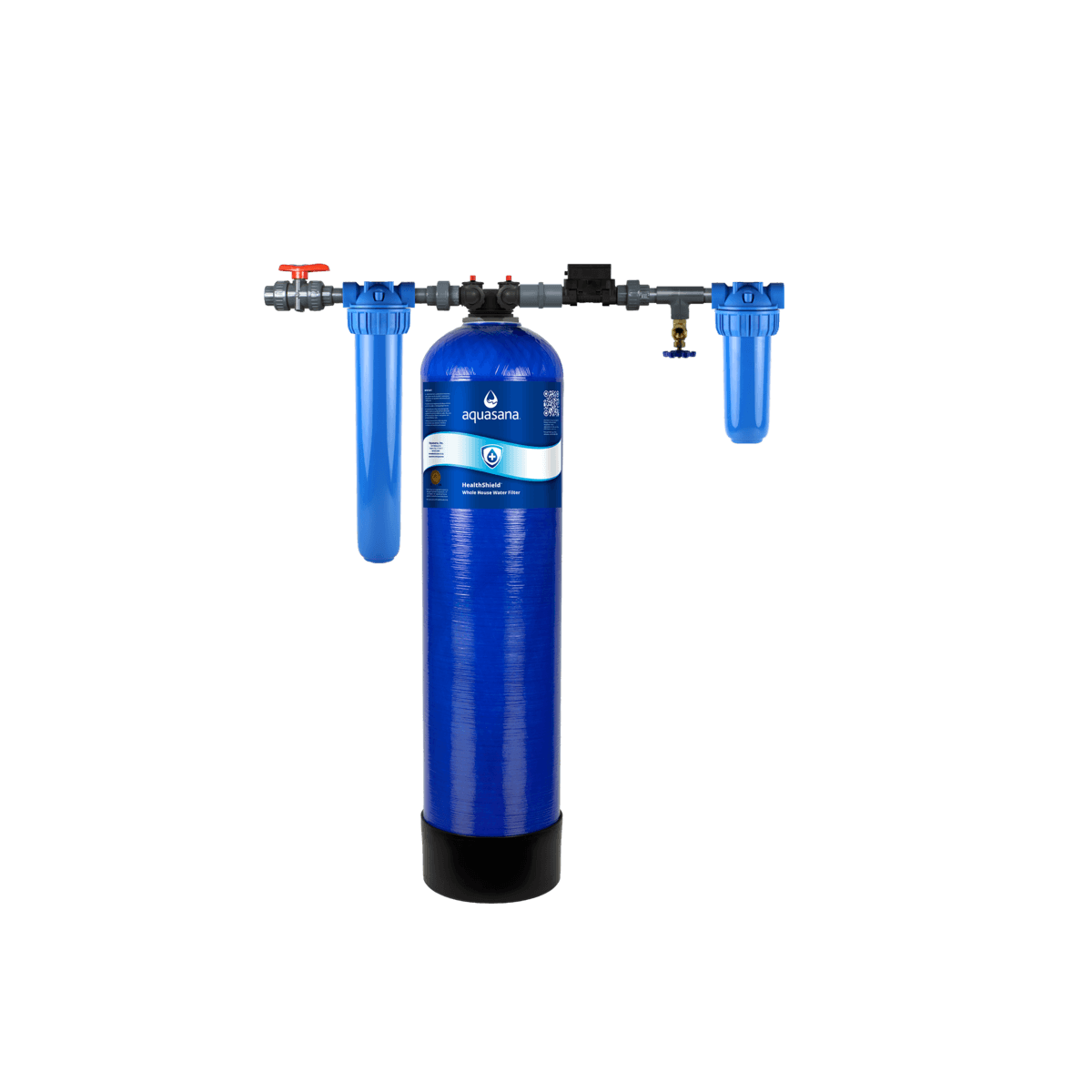
Current #1 on the city-water ranking. Exact-system health-effect reduction evidence is strong, but its 5.7 GPM certified/service flow makes household sizing important.
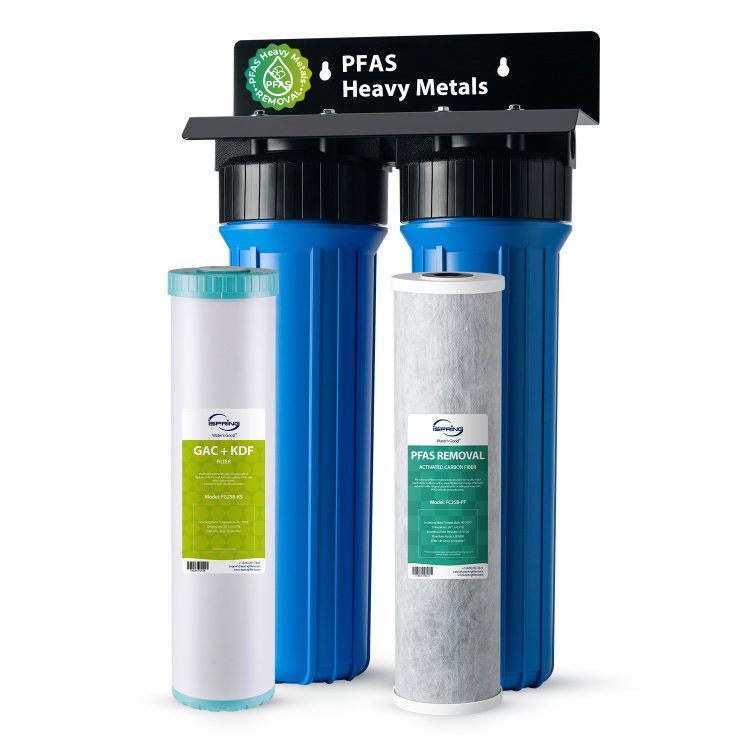
Current #2 on the city-water ranking. It offers much higher published flow, with verified exact-model PFAS/heavy-metal product data; confirm the exact certification evidence that matters to your goal.
Ranking updates can change these matches. Evidence label and flow are shown so the tradeoff stays visible.
Buffalo Water, managed by Veolia North America, identifies the public water system as NY1400422 in its 2025 annual drinking-water report, prepared in May 2026. Water comes from Lake Erie near the Niagara River and is treated through the Colonel Francis G. Ward facilities. This is Buffalo Water's reported system; a Buffalo-area ZIP code or an Erie County address does not prove the service supplier or plumbing in a particular home.
The official 2025 sampling table reports 89 ppm average calcium hardness as CaCO3 in the distribution system (range 80–100 ppm, sampled May–November). A separate entry-point average is 87 ppm (range 76–91 ppm, sampled January–December). These are different samples, not one universal house-tap hardness reading. Verify your water supplier and property conditions before choosing a softener.
The report records 2025 distribution PFOS average 2.07 parts per trillion (ppt, or ng/L), with a 1.34–3.56 ppt sampling range from January–October. The reported table marks No violation for that listed result under its report-year state comparator. This does not certify a current 2026 PFAS annual-average legal determination, all PFAS substances, or the concentration at an individual faucet. Federal UCMR5 screening and state compliance analyses must remain distinct.
Buffalo's original 2025 lead row shows a 90th-percentile value of 0.004 while labeling its column ppb, alongside an individual tap range of ND–7.13 ppb and the report's then-applicable 15 ppb action level. Because 0.004 mg/L would equal 4 ppb, the row's displayed units are ambiguous. We do not convert the number silently or claim either value is a validated system 90th percentile. Confirm the original laboratory/NYSDOH reporting units and monitoring period. A low system percentile does not imply zero lead in all homes.
The 2025 disinfection-byproducts table separately lists a TTHM running annual average of 35.9 ppb and 15–67 ppb sampling range. The maximum individual sample is not a running-average compliance violation. Buffalo's original report marks no violation for this specific table entry; current formal enforcement status requires the NYSDOH record.
2025 Buffalo Water PDF pages 3–4 visually audited November 9, 2026. Unresolved: reported lead 90th-percentile units, present regulatory PFAS compliance, current violation case statuses, ZIP/street boundaries and home plumbing. No federal source measurements or service-area mapping were edited.
A utility service area is not the same as a city boundary. Service-area maps can be approximate; confirm your provider on your bill.
Ask your provider about nearby communities and address-specific service coverage.
A shared system ID connects the reports, but does not mean every tap has identical water quality.
See the utility’s service-area map for coverage beyond this city.
Housing estimates describe Buffalo, not the materials, water quality or plumbing demand of your individual home.
Housing age does not confirm lead plumbing.
Tenure is context, not a treatment requirement.
Room count does not determine peak flow.
Explore the latest available outdoor air readings from AirNow. Credit: U.S. EPA AirNow and participating state, local and tribal air agencies. Live observations are preliminary and may change after quality assurance; they are not regulatory compliance determinations. Observation times are shown in the map. Missing readings do not mean clean air.
Open the live AirNow map ↗For validated regulatory air-quality data and trend analysis, use EPA AirData/AQS.
The water system covered in this report is Buffalo Water Authority (system ID NY1400422), serving about 276,000 people. If your bill shows another utility, use the ZIP report to confirm your system.
The latest 90th-percentile result in this dataset is 4 ppb for the period ending December 2025. Lead can also come from building plumbing, so utility results do not describe every tap.
PFAS was included in the national survey data used here and no sampling-point average in the city index triggered the screening flag.
Not automatically. The right treatment depends on the exact contaminants, your plumbing, household flow, maintenance preference and budget. Use the finder to combine this public-water profile with your home details.
Service boundaries can cross city limits, and a city may have more than one provider. Match the utility and system ID to your water bill before applying a public-water result to your address. Private wells need their own testing.
Utility identity, system ID, source-water context, violations and Lead & Copper results. For lead, the 15 ppb action level remains the applicable transition-period threshold until LCRI compliance begins November 1, 2027; FilterTier uses 10 ppb as a screening flag on these city pages.
National PFAS survey data used for the city screening rule. Survey data does not by itself establish MCL compliance. As of October 2026, PFOA/PFOS MCLs remain in force; EPA has separately proposed an optional compliance extension and proposed rescinding the PFHxS, PFNA, HFPO-DA and hazard-index provisions.
Match the provider and system ID to your water bill. Data snapshot: EPA SDWA 2026Q2 / UCMR 5 August 2026 final.
EPA SDWIS identifies NY1400422 as BUFFALO WATER AUTHORITY, active local-government community surface-water system serving 276,000. Utility-name typo found during QA and corrected globally.
Find the public water systems mapped to your ZIP and choose the one on your bill.