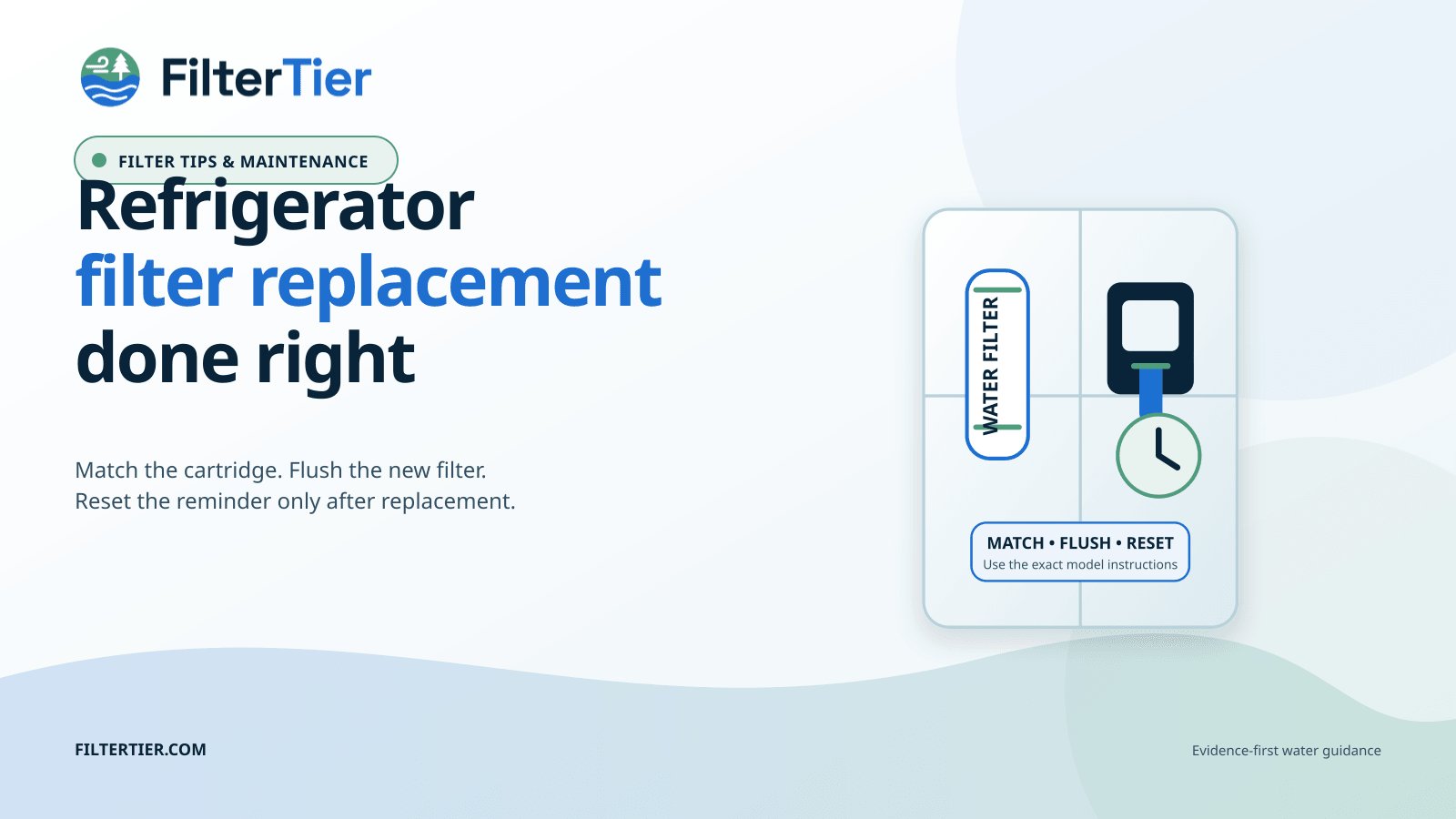

The short answer: inspect your HVAC filter monthly, follow the equipment and filter manufacturers’ instructions, and replace a disposable filter when its condition or the applicable instructions call for it. Do not keep a damaged, wet, poorly fitting, or overdue filter in service just because a subscription has not shipped. Do not replace a compatible, serviceable filter simply because an advertisement says every home with a pet needs the same interval. If you cannot establish compatibility or normal operation, ask a qualified HVAC professional.
A pet-friendly home does not come with one universal HVAC filter replacement interval. A household with a shedding dog, a busy return-air grille, and long heating or cooling cycles may see a very different filter condition from an apartment where the central blower rarely runs. Seasonal pollen adds another variable. The useful question is not simply, “Do pet owners change filters every month?” It is, “What does this specific filter, in this specific system, need—and what should I do about the room where exposure matters most?”
This guide builds a practical maintenance routine around that question. It separates inspection from replacement, shows how to keep the correct size and filter specification on record, and explains when a portable room purifier is a useful additional purchase rather than a substitute for HVAC maintenance. The checklists and household examples below are FilterTier editorial planning tools, not equipment service instructions or medical treatment recommendations.
Editorial disclosure: this article does not contain paid product placements or direct affiliate purchase links. Some linked FilterTier comparison pages may contain affiliate links and their own disclosures. No purifier or filter discussed here is claimed to cure allergies, guarantee symptom relief, remove every pollutant, or make an unsafe environment safe.
Start with the problem: fur, allergens, pollen, or equipment maintenance?
Visible fur is easy to notice; it is not a complete inventory of what is in the air. The EPA identifies animal-related proteins in skin flakes, saliva, urine, and other material as potential asthma triggers for people who are allergic. A tidy-looking room therefore does not establish that pet allergens are absent. Conversely, a pet in the home does not prove that a person’s symptoms are caused by that animal. Keep the household-cleaning question separate from the medical diagnosis question. See the EPA’s asthma trigger guidance for the underlying distinction.
Write down the actual complaint before buying anything. “Dog hair gathers beside the return grille” is a maintenance observation. “My bedroom feels dusty after vacuuming” is a room-specific observation. “My eyes itch during fall pollen season” is a symptom to discuss with an appropriate health professional if it persists or concerns you. These observations can coexist, but they should not all be translated into “buy the highest-numbered furnace filter.” A better purchase decision begins with a clearer description.
A useful household note has three columns: where the issue occurs, when it occurs, and what changed recently. For example, the living room may accumulate fur daily while a bedroom feels worse only after windows have been open. A newly adopted pet, construction work, longer cooling hours, or a different cleaning routine may help explain why an old maintenance calendar no longer seems useful. This record is a troubleshooting aid; it does not establish an exposure concentration or diagnose a health condition.
Also separate seasonal outdoor conditions from indoor routines. The CDC recommends checking pollen forecasts and, for people affected by pollen, measures such as changing clothes and showering after outdoor exposure and keeping windows closed during pollen season. Those steps address what enters the home and reaches the person, rather than treating filtration as the entire solution. Follow individual medical advice alongside environmental measures. The CDC’s pollen and health guidance provides the public-health context.
Make a filter identity card before setting a calendar
The most useful first maintenance task is often documentation. Before ordering a replacement, record the equipment model, filter location, current filter model, labeled dimensions, actual dimensions if specified, thickness, and approved filtration specification. Photograph the label and the way the filter sits in the rack. Keep the photographs with the equipment manual or a shared household note. If the existing filter may already be wrong, treat its label as a clue—not proof of the correct replacement.
Include the responsible person and the source of the specification. “Confirmed in the air-handler manual” is more useful than “the previous tenant used it.” In a rental, the owner or property manager may be responsible for filter changes or may specify an approved product. Ask for that information in writing through the normal maintenance process. Do not modify the rack, access equipment you are not authorized to service, or assume that purchasing a filter transfers responsibility for equipment repairs to you.
For homes with more than one system, create a separate record for each. Upstairs and downstairs equipment may use different dimensions, depths, or maintenance instructions. Label spare filters clearly so the right box goes to the right location. A stack of similar-looking packages can otherwise produce an expensive ordering error months after the original purchase, especially when another household member handles the next change.
FilterTier’s MERV filter finder can help organize a search by rating and size. The HVAC filter catalog is another comparison starting point. Neither replaces the equipment documentation or a professional compatibility check. A catalog match is not evidence that a particular blower, rack, or installation can use every product with the same nominal size.
- System or zone: a name everyone in the household recognizes.
- Equipment and filter model: copied exactly, including suffixes.
- Dimensions: nominal label, documented actual size, and depth.
- Approved specification: the manual or professional recommendation behind it.
- Installation date and next inspection date: separate entries.
- Replacement instructions: the relevant manufacturer wording or a saved manual link.
- Service contact: who to call if fit or operation is uncertain.
Inspect monthly; replace according to condition and instructions
Inspection and replacement are different jobs. ENERGY STAR’s maintenance checklist calls for monthly attention to air filters and explains that a dirty filter can increase operating costs or contribute to equipment problems. That is a useful reminder to look, not permission to ignore the instructions for a particular disposable, washable, or deep-media filter. Different products have different service requirements.
Set the first inspection reminder when a new filter is installed. At the inspection, compare what you see with the manufacturer’s directions and the installation record. Record the observation in ordinary language: “light surface dust,” “noticeable fur mat,” “frame distorted,” or “moisture present.” A photograph taken from a consistent angle can make later comparisons easier. A photograph cannot measure pressure drop, determine remaining filtration performance, or prove that a filter is safe to keep using.
If instructions specify a replacement interval, treat that instruction as part of the maintenance requirement rather than letting a clean-looking surface override it. If the filter appears to need attention sooner, investigate instead of waiting for the calendar. Visible condition, equipment behavior, and documented service guidance belong together. A pet count by itself does not provide enough information to calculate a precise lifespan.
Be especially careful with “up to” lifespan claims. A package may describe a maximum under particular assumptions, not promise that every home will reach it. A delivery subscription is even less informative: it tells you when a seller sends a box. It does not inspect the filter already in your system. Use subscriptions for convenience only after the actual product and maintenance needs are established, and keep the schedule adjustable.
When a new pet or a high-use season changes the household, use the next few inspections to rebuild your baseline. You might discover that the old timing remains reasonable, or that the filter needs earlier attention. The purpose is not to find the longest possible interval. It is to avoid both unnecessary replacement and neglected maintenance while remaining within the applicable instructions.
A practical inspection and replacement decision sequence
First, identify the correct access and shutdown procedure in the equipment instructions. Do not reach into moving equipment or open panels beyond the owner-maintenance scope. If the filter is difficult to access, the documentation is unclear, or the installation looks improvised, have the responsible service professional demonstrate the procedure. Convenience does not justify an unsafe shortcut.
Second, check whether you have a normal maintenance situation or a service problem. A disposable filter that is simply due for replacement is different from a wet filter, a collapsed frame, evidence of water intrusion, or unusual equipment behavior. Replace or service the filter as directed, but do not assume a new filter resolves the underlying cause of an abnormal condition. Document it and contact the responsible technician or property manager.
Third, confirm the replacement before removing packaging. Compare the model and dimensions with the identity card, not just the color of the box. Make sure the airflow marking and installation instructions are legible. Keep the receipt or order record until fit is confirmed. If the replacement must be forced, bent, or trimmed to enter the rack, stop and resolve the mismatch instead of creating a makeshift installation.
Fourth, install according to the equipment and filter instructions, including airflow direction and closure of the access panel. Do not stack filters in a slot intended for one, add a second filter at another location without system approval, or run the system without its required filter as a troubleshooting experiment. These are configuration changes, not routine replacements.
Finally, record the installation date and the next inspection reminder. If normal operation is not restored or a new problem appears, seek service rather than repeatedly swapping products. The maintenance log should distinguish “filter replaced” from “equipment problem resolved.” That distinction makes later service calls much more productive.
What changes when there are pets?
Build the routine around the rooms and activities in your home rather than an arbitrary formula such as one pet equals one replacement every fixed number of days. A pet that spends most of its time near a central return creates a different housekeeping pattern from one restricted to a separate area. Multiple pets can also mean more bedding, furniture contact, and cleaning activity. None of those observations translates directly into a standardized filter replacement interval.
Use a simple weekly housekeeping checkpoint alongside the monthly filter inspection. Look at pet bedding, the floor around the return, and the area near a portable purifier’s intake if you use one. Follow the relevant cleaning instructions and keep airflow openings unobstructed. This is not a reason to wash a disposable HVAC filter or vacuum a purifier’s main filter unless its manufacturer explicitly permits that method.
If someone is allergic to the animal, the EPA recommends measures including keeping pets out of bedrooms and off furniture, with suitable cleaning and filtration as additional approaches. A household can turn that into a practical agreement: decide which room is pet-free, who maintains the boundary, where bedding is kept, and how visitors or overnight routines will be handled. A purifier cannot enforce a bedroom boundary or remove material from bedding by itself.
Keep expectations concrete. A useful maintenance success might be “we stopped missing filter inspections,” “the correct spare is always available,” or “the purifier intake no longer gets blocked by a blanket.” Those are observable process improvements. “The air is allergen-free” is not a conclusion a household maintenance checklist can establish.
What changes during pollen season?
Seasonal planning works best when it starts before the household notices a problem. Put a reminder near the usual local pollen season to check the filter identity card, inspect the installed filter, and verify that any portable purifier has the correct replacement available. This is a preparedness reminder, not an automatic order to discard every filter on the first day of a season.
Keep an outdoor-to-indoor transition routine realistic. A place for outdoor clothing, a reminder to change after yard work, and attention to the bedroom may be easier to sustain than a complicated cleaning schedule. The CDC’s pollen guidance supports reducing tracked-in exposure and following prescribed allergy or asthma care. These measures belong alongside filter maintenance, not underneath a promise that a particular MERV rating will solve seasonal symptoms.
Do not confuse a pollen forecast with a complete air-quality report. Smoke, particulate pollution, ozone, heat, and weather conditions may require different decisions about ventilation and outdoor activity. If wildfire smoke is the concern, use official local guidance and FilterTier’s wildfire-smoke purifier finder as a separate equipment-planning tool. Evacuation instructions and other official safety directions take priority over any indoor filtration plan.
For the maintenance record, note unusual circumstances without assigning them a made-up replacement penalty. “Windows open during yard work” is a useful observation. “That event removes exactly ten days of filter life” is not supported by the information available to a typical household. Inspection and the product’s instructions remain the decision framework.
Choose compatible filtration, not just a bigger MERV number
MERV describes particle-removal performance across specified size ranges under a test framework. It is not a universal ranking of how well a filter will work in every installed system. The EPA’s MERV explanation is the primary reference for the rating; FilterTier’s MERV ratings guide provides the broader buying context. This maintenance article deliberately does not reproduce the whole rating comparison.
For a replacement purchase, ask a narrower question: does this exact filter meet the specification for this equipment and rack? The EPA recommends MERV 13 or the highest efficiency the system can accommodate, while emphasizing compatibility. A professional can help resolve uncertainty. A marketing badge, an online review, or a matching nominal dimension does not establish the allowable operating conditions of your installation.
If you are considering an upgrade, bring the technician the current filter model and the candidate’s specifications. Ask what evidence supports the choice, whether the rack and seal are suitable, and how maintenance instructions change. That is a more useful conversation than asking for “the strongest allergy filter.” You should leave with an exact product specification or a clearly defined acceptable range, not a vague instruction to buy something better.
A deeper filter is not a drop-in option for a shallower slot. Similarly, a higher rating is not permission to ignore fit. Keep system modifications separate from routine shopping. If a cabinet change or other work is recommended, get the scope and maintenance implications explained before deciding. FilterTier’s MERV 13 comparison page can help organize compatible candidates, but it cannot inspect your equipment remotely.
When a room purifier is the more targeted addition
A central HVAC filter and a portable purifier have different jobs. The former filters air moving through the system; the latter is intended for the room or area it serves. The EPA’s home air-cleaner guide treats filtration as a supplement to source control and appropriate ventilation, not a replacement for them. If your priority is one bedroom, a room-specific plan may be more useful than repeatedly changing central filters in search of an immediate symptom response.
Before shopping, write down the room dimensions, ceiling height, usual door position, intended operating hours, and available placement locations. Identify whether the device can run without its intake or outlet being covered by furniture, curtains, or pet bedding. The exact clearance requirements belong to the manufacturer’s manual. Do not buy a unit first and assume a crowded corner will be an acceptable installation.
Use CADR rather than a vague “covers the whole house” claim as a starting point for performance comparison. AHAM reports separate clean-air delivery rates for smoke, dust, and pollen and gives a general sizing rule of at least two-thirds of room area, with adjustments for higher ceilings and different smoke needs. Read AHAM’s air-filtration standards guidance and check the exact model’s verified information rather than transferring a specification from a related model.
For illustration, a 12-by-15-foot room has 180 square feet of floor area. Two-thirds of 180 is 120. That arithmetic demonstrates the general sizing rule; it does not establish that any particular device provides 120 cubic feet per minute at the quiet setting you intend to use. Published CADR commonly refers to a specified test setting, often the highest speed. Ask for speed-specific evidence if nighttime performance is central to the purchase.
Then evaluate ownership rather than just the first purchase. Can you obtain the exact replacement filter? Is its service procedure practical? Will the household tolerate the sound at the needed operating setting? Can the device stay in its intended location without becoming a trip or cord hazard? Use the room purifier finder and HEPA purifier comparisons to structure those questions. An evidence gap in a listing should remain an evidence gap, not be filled with an assumed performance claim.
Coordinate two maintenance calendars without mixing them up
If you use both HVAC filtration and a portable purifier, give each its own record. The central filter may be disposable while the portable device has a cleanable prefilter and a separate non-washable main filter. Their reminders may represent different things. An indicator light might track elapsed operating time rather than directly measuring remaining performance; confirm what the manual says for that model.
Use clear task names: “inspect upstairs HVAC filter,” “clean bedroom purifier prefilter as instructed,” and “check main-filter replacement guidance.” Avoid a single recurring reminder called “change air filters,” which encourages treating every component the same way. Record which component was serviced and what was done. Reset a reminder or indicator only after the corresponding service task, following the manufacturer’s procedure.
Store spares in their packaging in a suitable dry location, with the device or zone name on the outside. Do not remove packaging from an expensive spare merely to make a storage drawer look tidy. Keep reorder information available, but do not assume a seller’s substitution has the same fit or documented performance. A changed replacement part number deserves a compatibility check.
For households sharing responsibilities, assign one person to verify the record even if several people perform tasks. This avoids the common ambiguity of “I thought you changed it.” A shared note with a date, component, and brief observation is enough; a complex app is optional. The maintenance system should be easier to follow than to ignore.
A cost worksheet that does not confuse price with performance
Compare recurring costs using the exact replacement quantity and a realistic service assumption. Write down the price per usable filter, shipping or subscription conditions, and the number of replacements expected under the applicable instructions. Label the estimate as a budget, then revise it when actual maintenance records are available. Do not select an unsafe interval to make the annual total look lower.
Here is hypothetical arithmetic, not a current market-price claim: a compatible filter costing $18 and replaced four times in a year totals $72 before shipping and tax. A $30 filter replaced three times totals $90. Those totals do not establish which product is more effective or appropriate. They simply prevent a lower sticker price from being mistaken for a lower annual cost without checking quantity.
For a portable purifier, keep replacement-filter costs separate from electricity. If an illustrative device used 30 watts for 12 hours daily, its calculated consumption would be 0.36 kilowatt-hours per day. At an illustrative $0.20 per kilowatt-hour, that is $0.072 per day, or about $26.28 over 365 days. Real power varies by model, speed, and operating schedule, and your electricity rate may differ. Do not treat this example as a specification for a product in the catalog.
Include avoidable waste in the practical comparison. Buying a large multipack of the wrong dimensions is not a bargain. A subscription that arrives faster than needed ties up money and storage space. A bargain purifier with unavailable replacement filters may be difficult to maintain. The best worksheet connects each cost to an identified product, an actual maintenance requirement, and a source you can revisit.
What a monitor can—and cannot—tell you
A low-cost indoor monitor can help reveal patterns in the pollutants it is designed to measure. It does not provide a complete inventory of indoor air or identify every allergen. The EPA’s indoor monitor guidance emphasizes sensor limitations, placement, and the difference between a consumer reading and a health assessment. A green display is not proof that a room is free of pet allergens, and a particle reading is not a filter-life meter.
If you already own a monitor, document its model, measured pollutant, placement, and relevant activities before drawing conclusions. Comparing readings from different locations or settings without noting the changes can create a misleading story. Treat the device as one observation tool, not the authority that overrides a filter’s service instructions or a clinician’s advice.
Do not use a general air-quality monitor as a substitute for required smoke or carbon monoxide alarms. Do not interpret a purifier’s colored display as permission to remain in a dangerous situation. For a maintenance decision, the immediate practical question remains whether the installed filter and equipment are being used and serviced correctly.
Three household examples: applying the workflow
One dog, a busy living room, and a compatible existing filter
Imagine a household that finds fur near the return but has no documented equipment problem. Its first steps are to confirm the filter specification, inspect the installed filter, and establish a monthly reminder. It also keeps pet bedding away from the return opening and follows a sustainable cleaning routine. It does not automatically increase the MERV rating or assume the filter needs replacement every thirty days. After several inspections, the record gives the household a better basis for discussing any changed maintenance needs with its technician.
A pollen-sensitive sleeper in a rental apartment
This person cannot choose the building’s central filter independently. They ask management who maintains it and what the approved specification is, while keeping a room-focused plan for the bedroom. They measure the room, examine purifier placement and operating sound, and check replacement availability before buying. Pollen-management habits and prescribed medical care remain separate parts of the plan. The purchase is framed as supplemental room filtration, not a guarantee that the apartment will become symptom-free.
Two systems, several pets, and confusing replacement deliveries
This household has boxes arriving on one subscription schedule even though the upstairs and downstairs systems use different filters. The immediate fix is administrative: make two identity cards, sort the unopened spares, confirm responsibility, and separate the reminders. Any incorrect unopened order is handled through the seller’s normal return process. The family then follows each system’s own maintenance requirements instead of trying to force both into the same calendar. No new purifier is required to solve this particular problem.
Questions to bring to an HVAC professional or property manager
Prepare a short, specific request rather than asking for a general allergy upgrade. Share the equipment model, current filter model, photographs of the rack, and your maintenance observations. Ask which exact dimensions and filtration specifications are acceptable, whether the current installation fits correctly, and what inspection or replacement guidance applies. If there has been abnormal equipment behavior, describe what happened and when rather than assuming the filter caused it.
Ask how any proposed change will be verified. A useful answer explains the product selection and installation, not just a higher number on the package. Also ask which tasks you may perform yourself and which require service. If the recommendation involves a cabinet modification, a different filter depth, or another equipment change, keep that proposal distinct from the price of routine replacement filters.
For a rental, confirm how to report a wet or damaged filter, whether maintenance supplies replacements, and whether the resident should touch the equipment at all. Save the response with the maintenance record. Clear responsibility matters more than having the most elaborate shopping list.
Your first month: a manageable action plan
Today: locate the instructions, make the filter identity card, and determine who is responsible for maintenance. Inspect only within the permitted owner-maintenance procedure. Address an abnormal condition through the appropriate service channel. If the correct filter is due, replace it according to instructions and record the date.
This week: identify the room where supplemental filtration would be most useful, if any. Measure it and check placement options before comparing devices. Review practical pet and pollen habits with the household. Avoid buying several products at once when the underlying maintenance problem has not yet been clarified.
At the next monthly check: inspect again, record the condition, and compare it with the relevant instructions. Review whether reminders and responsibilities worked. Adjust the organizational process if tasks were missed, but do not invent a new technical replacement interval from a single observation.
As seasons or circumstances change: revisit the record after a new pet, a move, a system replacement, or a change in operating patterns. Keep the old notes so you can explain what changed. A reliable routine is a living maintenance record, not a permanent promise printed on a subscription box.
Frequently asked questions
Does every home with pets need monthly filter replacement?
No universal interval follows from pet ownership alone. Monthly inspection is a useful maintenance checkpoint, while replacement depends on the applicable instructions and condition. If you repeatedly find substantial loading before the expected service point, document it and discuss the appropriate product and maintenance routine with the responsible professional.
Should I wash or vacuum a disposable furnace filter?
Do not improvise a cleaning method to extend a disposable product’s service life. Follow its instructions. A component explicitly designed to be cleaned is different from a disposable HVAC filter or a purifier’s main filter. Keep those procedures distinct in your maintenance notes.
Will a room purifier replace my central filter?
No. The central system still needs its specified filter and maintenance. A room purifier is an additional device for the area it serves. It does not repair equipment, make an incompatible central filter acceptable, or remove the need for source control and normal housekeeping.
Does a higher MERV rating guarantee better allergy relief?
No. A laboratory particle-removal rating is not an individual health-outcome promise. Compatibility, installation, operation, exposure sources, and personal sensitivities all matter. Use the rating to compare appropriate filter specifications, and use a health professional for persistent or concerning symptoms.
Where should I start if I do not know whether I need HVAC filtration or a purifier?
Start with the existing equipment record and the room or activity you want to address. FilterTier’s local air-quality lookup adds outdoor AQI context; it does not measure your indoor air or determine equipment compatibility. Use the room and MERV finders linked above for equipment planning. Bring any uncertainty about system compatibility to an HVAC professional, and keep medical questions separate from product selection.
Bottom line: pets and seasonal pollen are reasons to make maintenance more deliberate, not reasons to abandon equipment instructions. Know the exact filter, inspect consistently, replace when required, and add room filtration only with a clear room-specific purpose. A documented, compatible setup is more useful than a larger stack of products with overlapping promises.
Sources
Primary sources checked October 16, 2026. Household workflows, scenarios, and hypothetical cost calculations are FilterTier editorial examples, not equipment tests.