
Private-well treatment should start with laboratory testing, not symptoms and not a filter catalog. Clear water can still contain nitrate, arsenic, bacteria, PFAS, or other contaminants. Orange staining can point to iron but does not tell you the concentration or whether manganese is present. Rotten-egg odor can involve hydrogen sulfide, sulfur bacteria, a water heater, or several causes at once. Hardness, pH, iron, manganese, sediment, bacteria, nitrate, arsenic, and local contaminants require different treatment technologies, so the well should be characterized before equipment is sized.
A good private-well test answers two questions: Is the water safe to drink? and What chemistry will the treatment equipment have to handle? This guide covers the core tests, when to expand the panel, how to collect samples, how to interpret results, and how those results change treatment decisions.
Why private wells need a different approach from city water
Public water systems are regulated and routinely monitored. Private wells are generally the homeowner’s responsibility. There is no utility continuously adjusting treatment, disinfectant, corrosion control, or source management for your individual well.
That independence can be an advantage, but it means the homeowner needs a testing routine and should respond to changes in the well, property, or surrounding land use.
Test before buying treatment
Buying from symptoms alone is one of the most expensive mistakes in well-water treatment. A generic “iron filter” can fail if the real problem is low pH plus iron. A softener can remove some ferrous iron but may foul quickly at higher levels. A UV reactor can be ineffective if turbidity or iron coats the sleeve. A carbon tank can improve odor while leaving nitrate or arsenic untouched.
The basic annual well-testing concept
EPA and public-health agencies encourage private-well owners to test regularly and after events that could affect the well. Common baseline parameters include total coliform bacteria, nitrate, pH, and other locally relevant contaminants. Your state or county health department may recommend a specific annual panel based on regional geology and land use.
Total coliform bacteria
Total coliform is commonly used as an indicator that the well or plumbing may be vulnerable to contamination. A positive result does not identify every pathogen directly, but it signals that the system deserves investigation.
E. coli
E. coli is a more specific indicator of fecal contamination and warrants prompt attention. Follow local health guidance for drinking-water use, well inspection, disinfection, repeat sampling, and corrective work.
Why bacteria sampling technique matters
A dirty faucet aerator, nonsterile bottle, hand contact, or improper storage can contaminate a sample. Use the laboratory’s sterile container and collection instructions exactly. Remove aerators if instructed, disinfect the sample point when required, and keep the sample cold or deliver it within the required holding time.
Nitrate
Nitrate can come from fertilizers, septic systems, animal waste, and natural sources. It is especially important for households with infants. Nitrate has no reliable taste, color, or odor, so laboratory testing is essential.
Why nitrate is not a filtration symptom
A well can look perfect and still have elevated nitrate. Carbon, UV, sediment filters, and softeners are not general nitrate solutions. Treatment typically uses technologies such as reverse osmosis or nitrate-selective ion exchange when needed.
pH
pH describes acidity or alkalinity. Low-pH water can be corrosive to plumbing and treatment equipment, while higher pH affects scaling and contaminant chemistry. pH is especially important when iron, manganese, copper, lead, neutralization, or oxidation treatment is involved.
Alkalinity
Alkalinity measures the water’s capacity to neutralize acid. It is related to pH but not the same thing. Treatment professionals use alkalinity to understand buffering, neutralizer sizing, corrosion control, and how pH may respond to treatment.
Hardness
Hardness is driven mainly by calcium and magnesium. It causes scale, spots, soap inefficiency, and water-heater buildup. It is commonly reported as mg/L as calcium carbonate or grains per gallon.
Convert hardness to grains per gallon
About 17.1 mg/L as CaCO3 equals one grain per gallon. A result of 171 mg/L is therefore roughly 10 grains per gallon.
Hardness and treatment
A conventional salt-based softener removes hardness through cation exchange. Salt-free conditioners can reduce scale behavior but do not remove calcium and magnesium in the same way. The test result helps determine whether actual softening is warranted.
Iron
Iron can cause orange staining, metallic taste, sediment, and fouling. Laboratory testing should identify concentration and, when possible, help distinguish dissolved ferrous iron from oxidized particulate iron.
Why iron form matters
Clear-water iron can emerge from the well dissolved and oxidize after exposure to air. Red-water iron is already particulate. Organic or bacterial iron conditions can behave differently again. Treatment that works well for one form may fail on another.
Manganese
Manganese can create dark staining, metallic taste, and treatment challenges. It can be harder to oxidize than iron and often requires suitable pH and media conditions.
Iron and manganese together
Many well filters are designed to handle both, but capacity and operating conditions differ. Test both instead of assuming every stain is iron.
Hydrogen sulfide
Hydrogen sulfide causes rotten-egg odor. It can occur naturally, result from sulfur-related bacteria, or appear mainly in hot water because of water-heater chemistry.
Why hot-only sulfur odor changes the diagnosis
If odor is present only at hot faucets, inspect the water heater and anode system before installing whole-house sulfur treatment. A whole-house filter cannot correct a problem generated only inside the heater.
Sulfate
Sulfate in source water is different from hydrogen sulfide gas. A sulfur odor does not automatically tell you sulfate concentration. Laboratory testing separates the chemistry.
Arsenic
Arsenic can occur naturally in groundwater. It has no reliable taste or odor. Treatment depends on concentration, oxidation state, and other water chemistry.
Why arsenic speciation can matter
Arsenic can occur primarily as arsenite (As III) or arsenate (As V). Some treatment media remove arsenate more readily, so oxidation may be part of the treatment strategy. A knowledgeable professional can determine whether speciation testing is useful.
Fluoride
Fluoride can occur naturally in groundwater. Where concentrations are high and reduction is desired, reverse osmosis, activated alumina, or other technologies can be considered. Standard carbon should not be assumed to remove fluoride.
Chloride
Chloride can contribute to salty taste and corrosion and can indicate road salt or other influences in some regions. High chloride can also affect treatment materials and corrosion behavior.
Sodium
Sodium can occur naturally or increase after ion-exchange softening. Households monitoring sodium intake may want to understand source levels and consider a separate drinking-water treatment strategy.
Total dissolved solids
TDS is a broad measure of dissolved ions. It can help characterize mineralized water but does not tell you which contaminants are present. A high TDS number is not a complete safety test.
Conductivity
Conductivity tracks the water’s ability to conduct electricity and broadly correlates with dissolved ions. It is useful for trend monitoring but is not a contaminant-specific result.
Turbidity
Turbidity measures cloudiness from suspended particles. High turbidity can interfere with UV disinfection and shorten cartridge life. It can also signal well or pump problems.
Sediment
Visible sand or silt is often better characterized through observation, filtration, particle analysis, and well inspection than a standard dissolved-chemistry panel. Heavy sediment can indicate pump placement, well screen, or casing issues.
Lead and copper on private wells
Lead and copper are usually plumbing-corrosion issues rather than groundwater contaminants. Low pH and corrosive water can increase metal release from household plumbing. Sample the tap when plumbing risk exists.
Uranium and radionuclides
Certain geologic regions have elevated uranium or other radionuclides in groundwater. These are not detectable by taste or odor. Local geology should guide whether they belong in your expanded panel.
PFAS
PFAS testing can be appropriate near known industrial sources, airports, military/fire-training sites, landfills, certain manufacturing areas, or communities with documented groundwater contamination. PFAS analysis is specialized and more expensive than routine well panels.
VOCs
Volatile organic compounds can be associated with fuel releases, solvents, dry-cleaning sites, industrial activity, or contaminated groundwater plumes. If the property is near a known source, VOC testing can be more important than adding a broad generic filter.
Pesticides and herbicides
Agricultural areas may justify pesticide or herbicide testing based on local land use and health-department guidance. Do not assume a standard well panel includes them.
Perchlorate and other local contaminants
Some regions have specific industrial or geologic concerns. The most efficient expanded panel is based on local evidence rather than testing every known chemical indiscriminately.
How to use local health-department guidance
County and state agencies often know which contaminants are common in local wells. Their recommended panel can be more useful than a national generic list. Ask about local geology, agricultural activity, septic density, industrial plumes, and recent contamination events.
How to use neighboring well results
Nearby detections can identify a reason to test, but they do not prove your well has the same level. Groundwater moves through complex geology, and well depth or construction can differ.
When to test after flooding
Floodwater can enter wells and carry bacteria, chemicals, and debris. Follow local guidance for inspection, disinfection, and testing before returning the well to normal drinking-water use.
When to test after well repairs
Pump replacement, casing work, cap work, or other service can introduce bacteria or disturb sediment. Post-service disinfection and testing may be recommended.
When to test after a sudden change in taste or odor
New odor, color, cloudiness, or taste deserves investigation. Symptoms can suggest a direction, but laboratory testing and system inspection provide the diagnosis.
When to test after nearby construction or spills
Industrial releases, road work, fuel spills, landfill changes, and new development can create reasons for targeted testing depending on hydrogeology and distance.
How often to test a stable well
Routine frequency depends on local guidance and household conditions. A common approach is annual microbiological and basic chemistry testing, with broader contaminants tested periodically or when conditions change. Follow your state/local recommendations.
What to test when buying a home with a well
A real-estate transaction is an ideal time for a comprehensive baseline. Include microbiological quality, nitrate, pH, hardness, iron, manganese, arsenic where relevant, and local contaminants. A mortgage or local rule may require specific tests, but the minimum legal panel may not answer every treatment question.
What to test when a baby will use the water
Nitrate and microbiological safety deserve particular attention. Consult health guidance for infant formula preparation and any local well recommendations.
What to test when someone is immunocompromised
Microbiological risk and treatment can be more important in medically vulnerable households. Use appropriate health and water-quality professionals rather than relying solely on consumer filter marketing.
How to choose a laboratory
Use a laboratory certified or accredited for the drinking-water parameters you need. Your state environmental or health agency can provide laboratory lists. PFAS, VOCs, and microbiological samples have different bottle and handling requirements.
Why one “mail-in test strip” is not a complete well test
Home screening tools can be useful for hardness, pH, chlorine, or trends, but health-relevant contaminants should be confirmed with appropriate laboratory methods. A color strip should not determine an arsenic or PFAS treatment purchase.
Sample before treatment
To understand the well, collect raw-water samples before filters, softeners, or UV unless the laboratory instructs otherwise. If you only sample the kitchen after treatment, you cannot distinguish source water from treatment performance.
Sample after treatment too when verifying performance
Paired raw and treated samples can show whether a system is working. Use consistent timing and collection methods when possible.
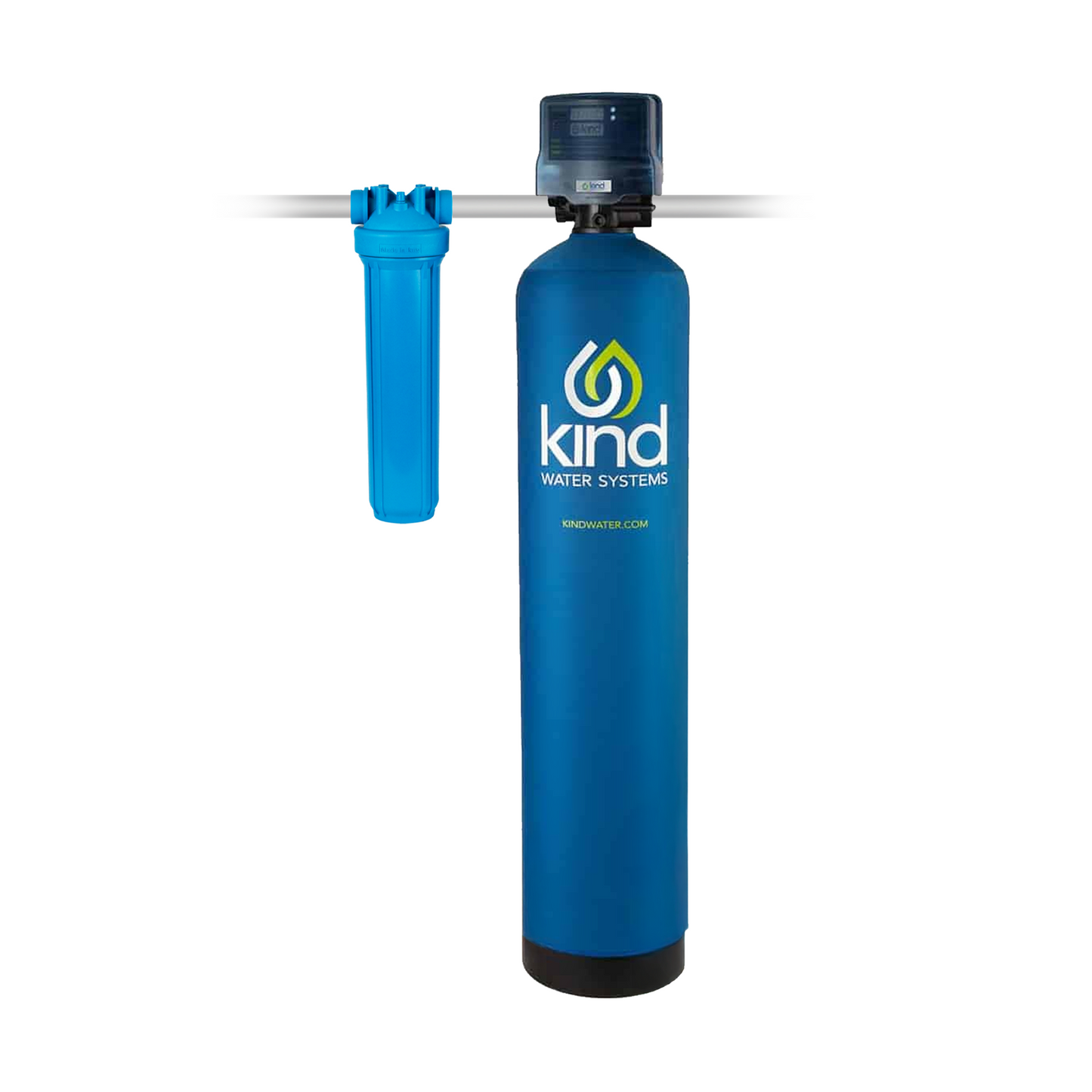
Sample location matters
A raw sample near the pressure tank characterizes the source. A sample at a distant faucet can reveal plumbing effects. A sample after a treatment stage verifies that stage. Label sample points clearly.
Stagnation versus flushed samples
Lead and plumbing-corrosion testing can use stagnation protocols. Source-water chemistry often uses a flushed sample. Follow the laboratory instructions for each purpose.
How to read a lab report
Start with units and reporting limits. Compare results with applicable health standards or advisory benchmarks from authoritative agencies, then separate health concerns from aesthetic/operational parameters such as hardness or iron staining.
Do not compare numbers in different units
mg/L, µg/L, ppm, ppb, pCi/L, CFU, and presence/absence results are different. Convert carefully before comparison.
Detection versus concern
A contaminant can be detected below a health standard. That does not make the detection irrelevant, but it does not mean the well violates a public-system rule either. Private wells are not regulated like public systems.
Health benchmark versus treatment goal
A household may choose treatment below a regulatory benchmark for personal reasons. FilterTier can explain technology and evidence without presenting an individual medical recommendation.
Treatment sequence from test results
A common design principle is to solve problems in an order that protects downstream equipment:
- gross sediment or sand;
- pH correction when needed;
- iron/manganese/sulfur treatment;
- softening where justified;
- carbon or specialty contaminant treatment;
- fine polishing;
- UV as a final microbial barrier when needed;
- point-of-use RO for drinking-water contaminants when appropriate.
This is an example, not a universal order. Water chemistry can change the sequence.
Why pH correction can come early
Oxidation and media performance often depend on pH. Acidic water can also corrode equipment. Neutralization may create additional hardness or sediment, which then affects downstream sizing.
Why iron should often be removed before a softener
Softeners can handle limited dissolved iron, but higher iron loads can foul resin and increase cleaning. Dedicated iron treatment can protect the softener and reduce salt use.
Why sediment should be controlled before UV
Particles can shield microorganisms and foul the quartz sleeve. UV should receive clear water.
Why hardness may be treated before UV
Hardness can scale the quartz sleeve. Softening can reduce sleeve-cleaning frequency in very hard water.
Why carbon is not a universal well filter
Carbon is excellent for many organics, tastes, odors, and disinfectants, but it does not generally solve hardness, nitrate, significant iron, bacteria, or arsenic by itself.
Why a softener is not a universal well filter
A softener removes hardness and can remove limited dissolved iron under suitable conditions. It is not a replacement for bacteria treatment, nitrate treatment, arsenic treatment, PFAS treatment, or sediment control.
Why UV is not a universal well filter
UV disinfects; it does not remove chemical contaminants or minerals. See Do I Need UV on Well Water?.
Why RO is usually point-of-use on wells
RO can address nitrate, arsenic, PFAS, TDS, and other dissolved contaminants at a drinking faucet. Whole-house RO is much more complex and is usually reserved for severe water-quality conditions.
Example: hard water and iron
Lab results show 18 grains hardness and 2 mg/L dissolved iron, with acceptable pH and no bacteria. The treatment discussion can focus on iron management and softening rather than adding UV or PFAS equipment without evidence.
Example: low pH, copper staining, and lead risk
The well is acidic and the home has older plumbing. The plan may include pH neutralization and tap testing for lead/copper. A simple carbon filter would not address the corrosion mechanism.
Example: positive coliform and clear chemistry
Inspect and disinfect the well, confirm sampling, and determine the contamination pathway. UV can be a strong final barrier after source correction and appropriate pretreatment.
Example: nitrate in an agricultural area
The whole-house water looks and tastes fine. Laboratory nitrate is the key finding. Point-of-use RO or nitrate-selective treatment becomes more relevant than aesthetic carbon filtration.
Example: PFAS near a known plume
PFAS testing identifies specific compounds. The household can choose point-of-use RO or whole-house GAC/ion exchange based on treatment scope, flow, evidence, and capacity. See the PFAS treatment guide.
Example: sulfur odor only in hot water
Raw cold-water testing does not show hydrogen sulfide. Inspect the water heater/anode before installing a large whole-house sulfur system.
How test results affect equipment size
Concentration matters. A filter that handles 1 mg/L iron may fail quickly at 10 mg/L. A neutralizer for mildly acidic water differs from one correcting very low pH. Treatment capacity should be tied to contaminant load, not just presence/absence.
Contaminant load calculation
Load depends on concentration multiplied by gallons treated. A household using 500 gallons per day places roughly twice the contaminant load on media as a 250-gallon-per-day household with the same concentration.
Why household peak flow also matters
Even if total daily gallons are modest, four simultaneous showers can require high service flow. Well-treatment tanks must satisfy both contaminant load and hydraulic demand.
Backwash flow matters on wells
Many iron, sulfur, carbon, and neutralizer tanks require backwashing. The well pump must provide enough flow to lift and clean the media bed. A large tank that cannot backwash properly is poorly matched to the well.
Well yield versus pump flow
A pump may deliver high short-term flow from a pressure tank while the well’s sustainable yield is lower. Large backwash cycles and household peaks should be evaluated with both well yield and pump system in mind.
Why storage can solve low-yield/high-demand conflicts
A storage tank allows a low-yield well to produce water slowly while a booster pump supplies high household flow. Treatment placement must then be designed around storage and microbial risk.
When to inspect the well itself
Repeated bacteria, sand, sudden turbidity, dropping yield, pump cycling, flooding, or a damaged cap can justify professional well inspection. Treatment equipment cannot repair a failing well structure.
Common well-testing mistakes
Testing only when water looks bad
Many health-relevant contaminants are invisible.
Testing after the filter only
You cannot diagnose the source.
Using strips for health contaminants
Use appropriate laboratory methods.
Skipping bacteria because the well is deep
Construction and events can still introduce contamination.
Buying an iron filter from staining alone
Test concentration, manganese, pH, and sulfur.
Ignoring local contaminants
Regional geology and land use matter.
Ignoring sample instructions
Bad sampling can create bad decisions.
Private-well testing checklist
- Confirm well construction and age.
- Collect raw water before treatment.
- Test bacteria with proper sterile technique.
- Test nitrate.
- Test pH, alkalinity, hardness, and TDS.
- Test iron and manganese.
- Add arsenic where regionally relevant.
- Add PFAS/VOCs/pesticides based on local risk.
- Record household peak flow and daily use.
- Design treatment from the complete panel.
- Sample after treatment when verifying performance.
- Retest on an appropriate schedule and after major events.
Frequently asked questions
What is the minimum well-water test?
At minimum, follow your state/local guidance. Bacteria, nitrate, pH, and locally relevant chemistry are common starting points.
How often should I test?
Regularly and after events such as flooding, repairs, or sudden water changes. Local agencies can provide specific frequency.
Can I test with home strips?
Use them for screening parameters such as hardness or pH, not as the sole basis for health-contaminant decisions.
Should I test before or after my softener?
Raw water before treatment is necessary for diagnosis; treated samples can verify performance.
Do I need PFAS testing?
It is most useful where local contamination sources or regional data create a reason for concern.
Do I need arsenic testing?
Local geology matters. Many regions recommend it for private wells.
What causes orange staining?
Often iron, but test the water and include manganese and pH.
What causes black staining?
Manganese can contribute, but other causes exist. Test rather than assume.
What causes rotten-egg odor?
Hydrogen sulfide, sulfur bacteria, or water-heater conditions can contribute.
Can one filter fix every well-water problem?
Usually not. Different contaminants require different mechanisms.
What this means for you
The best well-water system starts as a laboratory report and a hydraulic profile, not as a product. Test the raw water, understand the well, identify household flow, and design each treatment stage for a measured reason. That approach prevents unnecessary equipment and protects the equipment you actually need.
Use Find My Filter after testing, browse well-water rankings, and use the system database to compare exact flow, maintenance, and evidence.
Primary references
How to build a test panel from property history
Start with the land around the well. Ask what has happened on the property and nearby during the last several decades. Former farms can justify nitrate and pesticide attention. Old machine shops, dry cleaners, fuel stations, landfills, or industrial parcels can justify VOC or PFAS research. Homes near airports, fire-training areas, or military facilities may have a stronger reason for PFAS testing. A rural property with no obvious industry can still have naturally occurring arsenic, uranium, fluoride, or hardness.
The goal is not to test for every chemical ever manufactured. It is to combine the core well panel with a targeted local-risk panel.
How septic systems affect well-testing priorities
Private wells and septic systems often coexist. Poor separation distance, failing septic components, shallow groundwater, or unsuitable soil can increase microbial and nitrate risk. If the well is downhill from a septic field, close to one, or in a dense septic area, discuss appropriate testing and well inspection with the local health department.
How livestock and animal areas affect testing
Manure storage, barns, feedlots, and concentrated animal areas can contribute bacteria and nitrate to groundwater under some conditions. Well construction, depth, soil, and groundwater flow determine actual risk. Nearby agriculture is a reason to test, not proof of contamination.
How road salt can affect wells
Wells near heavily salted roads can show rising chloride or sodium over time. A salty taste, corrosion, or conductivity trend can prompt testing. Standard carbon filtration will not remove dissolved chloride or sodium effectively; RO may be relevant for drinking water.
How seawater intrusion changes coastal wells
Coastal groundwater can become more saline when pumping changes or drought lowers freshwater pressure. Rising chloride, sodium, conductivity, or TDS can signal salinity problems. Treatment may require RO or source-management changes rather than a conventional whole-house carbon tank.
How wildfire can affect well-water testing
After a wildfire, damaged wellheads, burned plumbing, chemical releases, and changes in runoff can create unusual water-quality concerns. Local agencies may issue specific testing guidance. Do not rely on a normal annual panel if a major fire directly affected the property or water system.
How mining and geology affect well panels
Mining regions and naturally mineralized geology can justify testing for metals, acidity, sulfate, or radionuclides. Local environmental agencies often have groundwater data that can guide the panel.
How an old underground fuel tank affects testing
Historic heating-oil or gasoline tanks can leak petroleum compounds. If a property has a known or suspected release, VOC testing and environmental investigation may be warranted. A carbon filter can adsorb some organics, but treatment should not substitute for addressing an active source.
How to use a sanitary survey of the well
A sanitary inspection looks at well cap, casing, grading, drainage, nearby contamination sources, visible defects, and construction. Repeated bacteria positives make this especially important. The inspection can identify a physical pathway that no amount of downstream UV should excuse.
Why the well cap matters
A secure sanitary cap keeps insects, debris, and surface water out while allowing proper venting. Cracked, loose, or improperly sealed caps can create contamination pathways.
Why casing height and grading matter
Surface water should drain away from the well rather than pond around it. Low casing or poor grading can increase vulnerability during storms or snowmelt.
Why abandoned wells matter
An improperly abandoned well can create a direct pathway into an aquifer. If old wells exist on the property, confirm that they were properly decommissioned under local requirements.
Why a water softener can distort raw-water interpretation
Sampling after a softener changes calcium, magnesium, sodium, and potentially iron. If you are trying to size a new softener or diagnose the well, sample upstream. Keep a separate post-softener sample only when you want to verify softening performance.
Why carbon can hide odor during testing
A carbon filter can remove some taste and odor, making treated water seem normal even when the raw well has sulfur or organics. Diagnose raw water first so the source problem is not hidden.
Why UV can mask microbial source problems
A clean post-UV bacteria sample is good evidence the reactor is working, but it does not tell you whether the raw well is repeatedly contaminated. Sample raw water when investigating the well itself.
How to test filter performance without contaminating samples
Use dedicated sample ports when possible. Sanitize the port according to laboratory guidance, avoid hoses, and label raw versus treated bottles carefully. For bacteria, sample-point cleanliness is especially important.
Why laboratory holding times matter
Some analyses must be performed soon after collection. Bacteria samples can have short holding times; VOC samples have specialized containers; PFAS sampling can have material-handling precautions. Schedule collection when the lab can receive the samples promptly.
Why PFAS sample containers are different
PFAS are used in many materials, so laboratories provide specific bottles and sampling instructions to reduce background contamination. Follow them precisely and avoid substituting household containers.
Why VOC bottles should not have headspace when instructed
Volatile compounds can escape into air. Laboratories often provide vials designed to minimize headspace. Do not pour VOC samples between containers or improvise the collection method.
How to read “<” values on a lab report
A result such as “<2 µg/L” usually means the compound was not detected above a reporting or quantitation limit of 2 µg/L. It does not mean exactly zero. Compare reporting limits when reviewing results from different labs or years.
How to handle a result that looks impossible
Do not immediately buy treatment. Check units, sample location, lab notes, holding time, and whether the result may reflect contamination or transcription. Repeat sampling can be appropriate when a result is inconsistent with history or water chemistry.
How to confirm bacteria
A positive result generally warrants prompt protective action and investigation. Follow health-department guidance on repeat sampling, well disinfection, and well inspection rather than simply retesting until one sample happens to be negative.
How to confirm a chemical contaminant
For an unexpected arsenic, nitrate, PFAS, VOC, or metal result, a confirmation sample can help rule out sampling error. Do not delay necessary exposure-reduction steps when the result is high and health guidance calls for action.
How to prioritize a long lab report
Sort results into four groups:
- health-relevant contaminants needing action;
- treatment-interfering chemistry such as pH, iron, manganese, hardness, turbidity;
- aesthetic issues such as staining or odor;
- normal background parameters that require no treatment.
This keeps an extensive panel from turning into an equally extensive treatment train.
Why not every detected mineral should be removed
Calcium, magnesium, bicarbonate, and many other minerals are normal groundwater constituents. Treatment is justified by concentration, household effect, or a health/treatment requirement—not the mere fact that the laboratory measured them.
Why TDS should not drive a whole-house system by itself
TDS combines many dissolved ions into one number. Two wells with the same TDS can have completely different chemistry. Use the individual results to decide whether treatment is necessary.
How to size a softener from the lab
Use hardness, iron if the softener is expected to handle limited iron, household gallons, and peak flow. A grain-capacity number without those inputs does not tell you regeneration frequency or salt use.
How to size an iron filter from the lab
Use iron concentration, manganese, pH, sulfur, oxygen/oxidation conditions, peak flow, and backwash capacity. A high-flow household may need a larger tank than the chemistry alone suggests.
How to size an acid neutralizer
Use pH, alkalinity, flow, and media type. Neutralizing media dissolves over time and can increase hardness, so downstream softening requirements can change after pH correction.
How to decide on UV from the lab
Use microbiological results plus turbidity, iron, manganese, hardness, color, and peak flow. UV is strongest when the water reaching the chamber is clear and stable.
How to decide on RO from the lab
RO becomes especially relevant when dissolved contaminants such as nitrate, arsenic, PFAS, fluoride, sodium, or high TDS matter at the drinking-water faucet. Check the exact certified contaminant claims and membrane operating conditions.
How to decide on whole-house carbon from the lab
Carbon is useful for many organic compounds, tastes, odors, and certain PFAS strategies, but it should be sized from the actual target and flow. Private wells without chlorine can have very different carbon requirements from city water.
How to estimate contaminant load
Multiply concentration by water volume conceptually. If one home has 1 mg/L iron and another has 5 mg/L at the same daily gallons, the second places roughly five times the iron load on treatment. Media life and regeneration demand change accordingly.
Why retesting after treatment matters
A system can be installed correctly and still be undersized or poorly matched. A post-treatment sample provides evidence that the intended contaminant is actually reduced under home conditions.
Why one successful test does not eliminate maintenance
Media exhausts, UV lamps age, membranes foul, and source water changes. Keep maintenance and periodic testing connected to the original treatment goal.
Build a well-water data file
Keep all lab reports, well records, pump information, treatment manuals, service dates, and before/after tests together. Over several years, this becomes a valuable history of the property and can reveal trends that one sample cannot.
Trend changes that deserve attention
- rising nitrate;
- rising chloride/conductivity;
- new bacteria detections;
- increasing iron or manganese;
- falling pH;
- new PFAS/VOC detections;
- sudden turbidity or sediment;
- declining well yield.
What to give a water-treatment professional
Provide the complete lab report, sample date, raw-water location, household occupancy, estimated daily use, peak-flow needs, well depth if known, pump data, pressure settings, and any history of flooding or repairs. That information produces a much better design than a photo of orange stains.
What a good treatment proposal should reference
The proposal should connect equipment to the test: “iron filter because iron is X mg/L,” “neutralizer because pH is Y,” “UV because bacteria risk exists and pretreatment meets requirements,” rather than stacking stages without explanation.
When no treatment is the right answer
A well can test clean, have moderate hardness the household accepts, and need only routine monitoring. The existence of a private well does not automatically require a whole-house filtration system.
Final testing workflow
Test the raw source. Confirm unexpected health results. Inspect the well when results or events justify it. Separate health concerns from aesthetic and equipment-protection concerns. Design treatment in the correct order. Verify treated water. Keep records. Retest when conditions change. That sequence is more reliable and usually less expensive than buying equipment first and diagnosing later.